Hospitality businesses are among the most targeted organisations in the UK. They hold large volumes of payment card data, run networks of third-party platforms, and operate with seasonal workforces that create persistent security gaps. Understanding the specific threats your business faces is the first step towards closing them.
Guest-facing systems, booking platforms, and payment infrastructure create multiple entry points for attackers, and the reputational damage from a breach can outlast the financial cost. This guide covers the key hospitality cybersecurity threats your business needs to understand, what drives them, and what a credible response looks like.
Why Cyber Criminals Target Hospitality Businesses
Few sectors offer attackers the combination of high transaction volumes, large customer databases, and relatively inconsistent security investment that hospitality does. Hotels, restaurants, pubs, and holiday parks process thousands of card payments daily and store personal data ranging from guest contact details to loyalty programme histories. That volume of valuable data, combined with the pressure to keep operations running around the clock, makes hospitality cybersecurity a serious and growing concern.
The reliance on third-party booking platforms, payment processors, and property management systems adds further complexity, because each integration is a potential entry point.
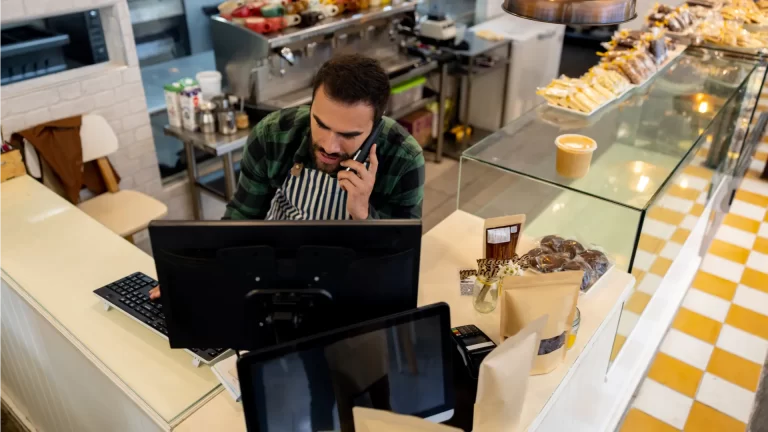
Restaurant cybersecurity faces similar challenges, with multiple point-of-sale terminals spread across front-of-house and back-of-house environments that are often managed by different teams. When you add seasonal peaks, rapid staff turnover, and the pressure to maintain guest experience above all else, the conditions for hospitality industry cyber threats become well established.
POS System Attacks and Payment Card Theft
Point-of-sale systems sit at the heart of every hospitality transaction, which is precisely why they attract sustained attention from attackers. A successful POS system cyberattack gives criminals direct access to payment card data at the moment of capture. As such, payment card data theft via POS compromise remains a persistent threat, and hotel cybersecurity teams that treat it as a peripheral concern tend to find out why that is a mistake.
The main attack methods include:
- RAM Scraping Malware: Software installed onto POS terminals to capture card data as it passes through memory, before encryption is applied. It can harvest large volumes of records daily without triggering visible alerts.
- Network-Based Intrusion: Attackers gaining access via a phishing email or unsecured endpoint can move laterally to POS infrastructure, installing malware or intercepting traffic without physically touching a terminal.
- Supply Chain Compromise: Third-party POS software providers or payment processors can themselves be breached, giving attackers access to multiple hospitality clients through a single point of failure.
- Physical Skimming Devices: Hardware attached to card readers in low-supervision areas such as bar terminals or self-service kiosks can capture card data with no network access required.


Booking System and Reservation Security Risks
Next, you have online booking platforms which are a critical revenue channel for hospitality businesses, and their vulnerability to attack is often underestimated. Booking system security matters because a compromised reservation platform does not just expose guest data. It can halt revenue-generating operations at exactly the moment that causes maximum financial damage, such as the start of a peak holiday period or a fully booked event weekend.
The risks operate on several levels. Credential theft targeting staff accounts gives attackers the ability to cancel reservations, redirect payments, or extract guest data without triggering obvious alerts. Third-party integrations, from channel managers to payment gateways, each introduce supply chain exposure that is difficult to audit. A hotel data breach originating in a third-party booking integration may go undetected for weeks, during which guest payment information continues to be harvested.
Securing Guest Wi-Fi Networks
Guest Wi-Fi is a standard expectation across hospitality, but it is also one of the most frequently overlooked areas of hospitality cybersecurity. Guest Wi-Fi security is not simply a matter of setting a password. It requires a deliberate approach to network architecture that prevents guests, and attackers using guest access, from reaching systems they should never touch.
The most significant risk is the absence of network segmentation. When guest Wi-Fi and internal systems share the same infrastructure, a compromised device becomes a potential foothold into booking systems, payment terminals, and staff machines. Hotel cybersecurity configurations should treat guest and internal networks as entirely separate environments. Rogue access points present a further threat as an attacker nearby can mimic the venue's own network name, intercepting traffic from devices that connect automatically. Regular wireless surveys and monitoring for unauthorised access points are essential controls.


Loyalty Programme and Customer Data Protection
Loyalty programmes represent one of the most attractive targets in hospitality. They aggregate exactly the kind of data attackers want: names, email addresses, home addresses, payment preferences, and travel patterns across tens of thousands of accounts. A loyalty programme data breach does not just compromise individual guests. It creates a dataset that can support phishing campaigns, identity fraud, and account takeover at scale.
Credential stuffing is one of the most common attack methods used against loyalty accounts. Attackers take username and password combinations from unrelated breaches and test them automatically against loyalty portals, relying on password reuse. Successful logins give access to points balances, stored payment methods, and personal information that can be sold or exploited. A hotel data breach of this kind can affect guests who have not visited recently, and the primary controls are as simple as implementing strong authentication and anomaly detection on login behaviour.
Understanding PCI DSS Compliance Requirements
Any hospitality business that accepts, processes, or stores payment card data is subject to the Payment Card Industry Data Security Standard, known as PCI DSS. PCI DSS in hospitality is not optional. It is a contractual requirement imposed by card schemes and acquiring banks, and non-compliance can result in financial penalties, increased transaction fees, and, following a breach, the potential loss of the ability to accept card payments.
The standard covers network security, access controls, encryption, vulnerability management, and monitoring. For hospitality operators, the key obligations centre on protecting cardholder data at point of capture, limiting access to payment systems, and ensuring third-party providers are themselves compliant.
Many operators assume their payment provider handles compliance on their behalf but in practice, responsibility extends to the operator's own environment. Treating PCI DSS as a genuine hospitality cybersecurity framework, rather than an annual checkbox, makes a material difference to actual risk.


Seasonal Cyber Threats and Peak Trading Risks
The hospitality sector's reliance on seasonal trading creates a predictable vulnerability pattern that attackers exploit. Summer holidays, Christmas, bank holiday weekends, and major local events are periods when businesses operate at maximum capacity, onboard temporary staff quickly, and place operational continuity above almost everything else. This is when hotel cybersecurity controls are most likely to be relaxed and least likely to be tested.
Hospitality ransomware attacks are not random. They are often timed to cause maximum disruption: a deployment that locks booking systems during a fully booked peak creates immediate financial pressure that increases the likelihood of a ransom payment.
Holiday park cybersecurity teams face this acutely, with short changeover windows leaving little capacity to manage an incident without affecting guests. Temporary employees onboarded without a proper security induction represent an additional risk, as workers new to the systems can be easier targets for phishing.
The Importance of Staff Cybersecurity Training
Front-line staff are the most common initial point of compromise in a hospitality cyberattack. Staff cybersecurity training in hospitality is an operational necessity, particularly where turnover is high and onboarding is fast. Restaurant cybersecurity awareness and hotel team training alike need to address the scenarios staff actually encounter.
Effective programmes cover:
- Recognising Phishing and Social Engineering: Staff should identify signs of a phishing email or a caller posing as a supplier. Simulated exercises are far more effective than slide-based sessions.
- Password Hygiene and Access Management: Shared passwords create risk. Staff should understand why and know how to use any password management tools provided.
- Reporting Procedures: A low-friction route to flag something suspicious, without fear of blame, means incidents surface earlier and cost less to resolve.
- Seasonal Worker Induction: New starters should receive a concise security briefing before accessing any business system.


How Solace Cyber Supports the Hospitality Sector
Solace Cyber works with hospitality businesses across the UK to reduce cyber risk and respond when incidents occur. Our services cover ransomware recovery, business email compromise in hospitality, threat detection, PCI DSS support, and security assessments that find vulnerabilities before attackers do.
As an ISO 27001 accredited provider with 24/7/365 availability, we deploy on-site the same day a breach is confirmed. Our digital forensics capability ensures evidence is handled correctly from the outset, supporting insurance claims and law enforcement action through our relationships with Regional Organised Crime Units and Action Fraud. Whether you operate a single venue or a multi-site group, we bring the same depth of experience to every engagement.
Protect Your Business Before an Attack Forces Your Hand
The businesses that fare best after a cyber incident are the ones that prepared before it happened. Taking the time to understand your exposure, close the obvious gaps, and establish a clear response plan makes a measurable difference to the outcome.
To discuss your organisation's cybersecurity posture, or if you are dealing with an active incident, contact Solace Cyber on 01202 308818 or via our contact form. We are available 24/7.